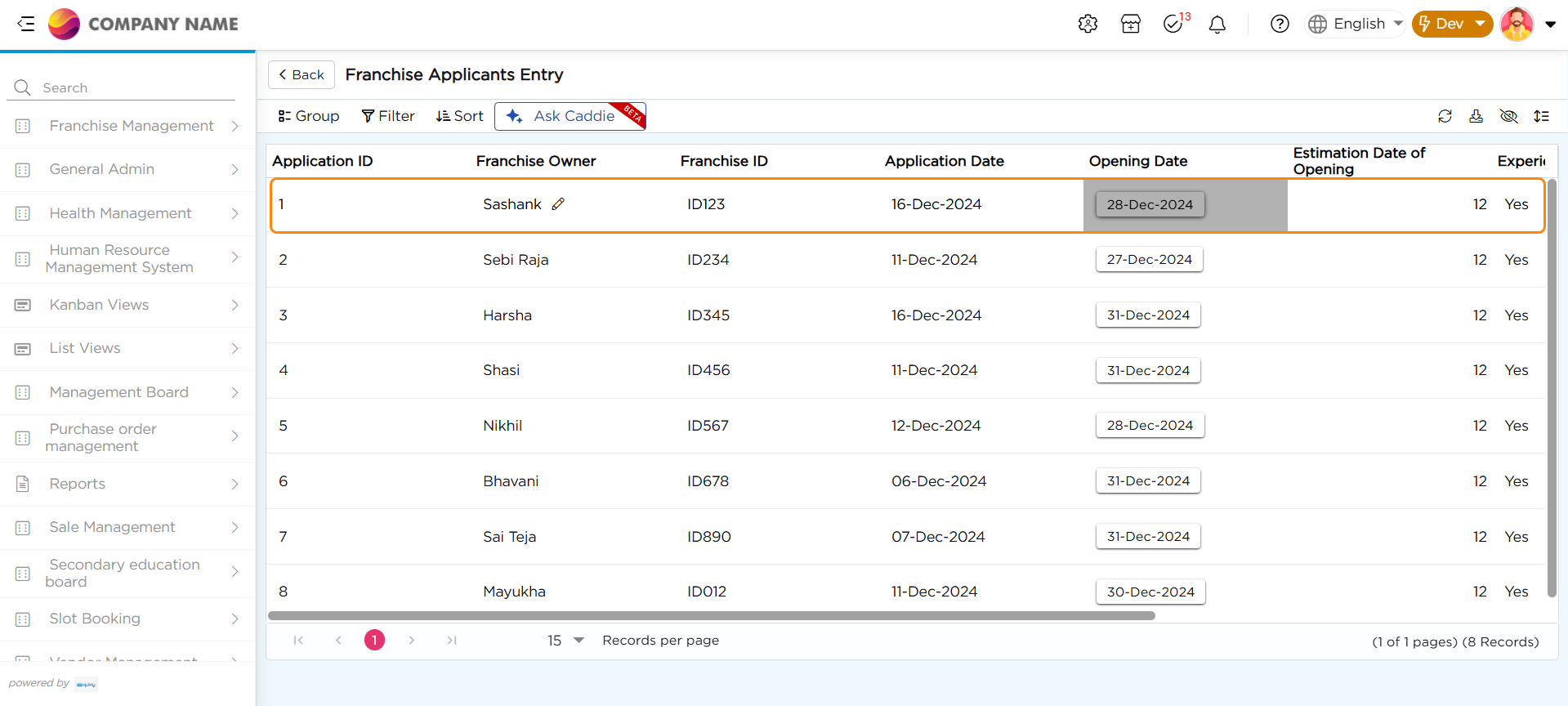
An add-on in Quixy functions as a plugin that extends the capabilities of artifacts such as Reports, References, and Views—essentially, anything built using a data source as the foundation. Add-ons are created based on a data source and are applicable only to artifacts that share the same underlying data source. Once an add-on is created, it can be utilized across multiple artifacts which are built on the same data source.
You can edit an add-on at any time; however, once it is integrated with an artifact, it cannot be deleted unless it is first detached from the artifact.
In this article, we will explore add-ons in greater detail, including their components, purpose, and the benefits they offer when integrated with artifacts.
¶ 1. Why Use Add-Ons?
Add-Ons are designed to extend the functionality of artifacts without modifying the core data source. They offer a flexible way to introduce custom columns, rules, and actions to specific artifacts while keeping the original data structure intact.
- Customization Without Data Source Changes – Modify how data appears and behaves in artifacts without altering the base data.
- Artifact-Specific Enhancements – Apply additional logic, fields, or actions only to relevant artifacts, preventing unnecessary clutter in others.
- Better Data Management – Maintain a clean and organized data source by avoiding structural changes that could impact multiple artifacts.
- Increased Flexibility – Adapt artifacts dynamically by adding smart columns, automation rules, or actions as needed. Learn about them in the use case below.
Example
Suppose a List View needs a "Priority" column to categorize tasks, but the same column isn't required in Reports. Instead of modifying the data source and affecting all artifacts, you can create an Add-On that introduces the "Priority" column only in the List View, keeping other artifacts unchanged.
¶ Related Article