¶ 1. Advanced Sandbox workflow
- Any user logging into the platform will land on the Live environment.
- The Organization Admin or Workspace Admin must switch to the Dev environment to start developing the solution that requires creating artifacts.
- In the Dev stage, creating artifacts works the same way as before.
- From the Admin Menu, you can create workspaces, roles, users, applications, data tables, data sources, reports, and establish app–data table relationships. Configuration of account preferences and other stage-specific aspects is explained later in the article.
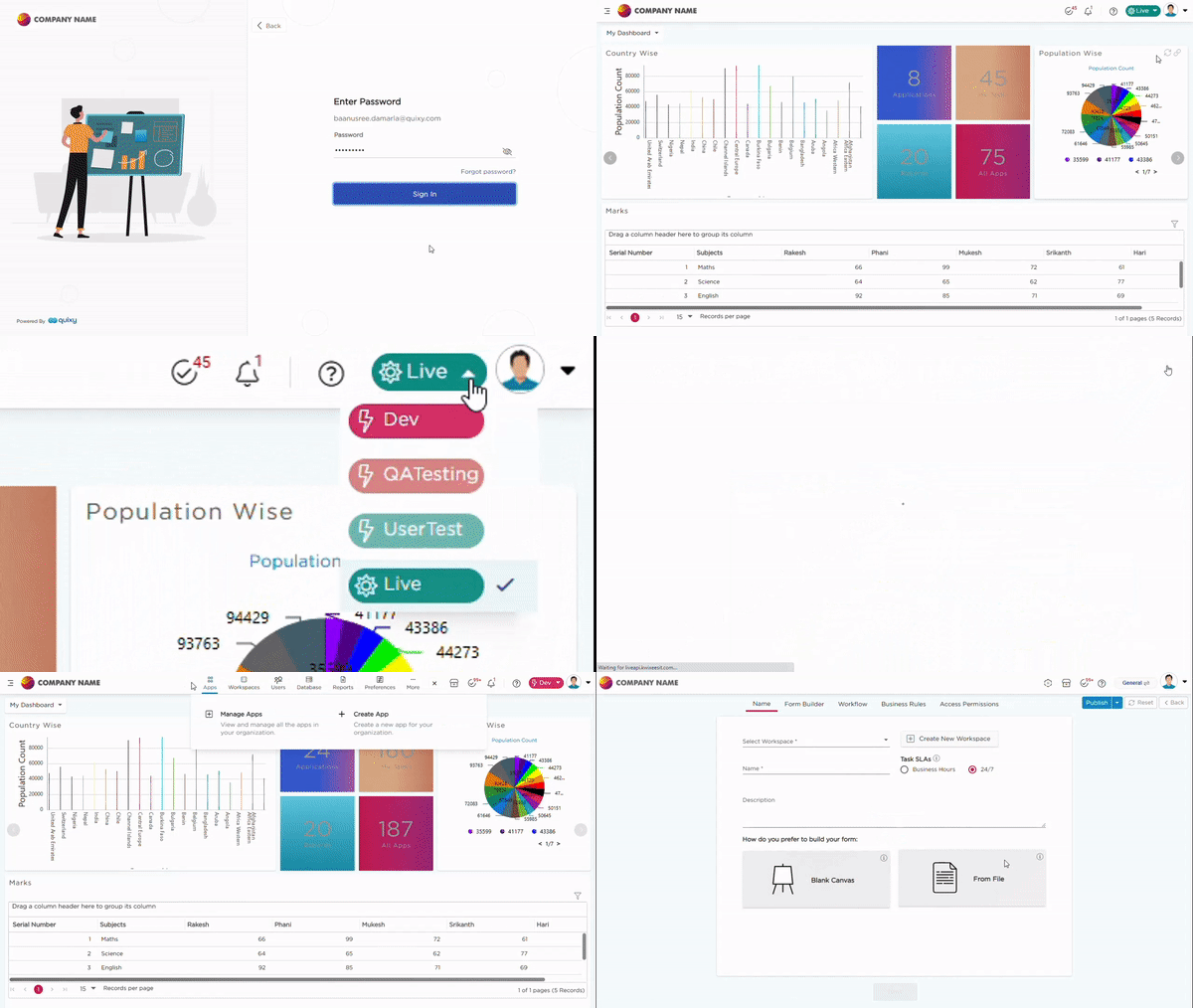
5. After artifact creation is complete, the respective citizen developer can test the artifacts or solution in the Dev environment to validate functionality before deploying them to the QA stage for actual testing.
6.In Advanced Sandbox, artifacts do not move to the Production (Live) stage immediately after creation. Instead, they are parked in a space called Branches until the solution or artifact is deployed to QA or UAT for testing, or to Live for real-time usage.
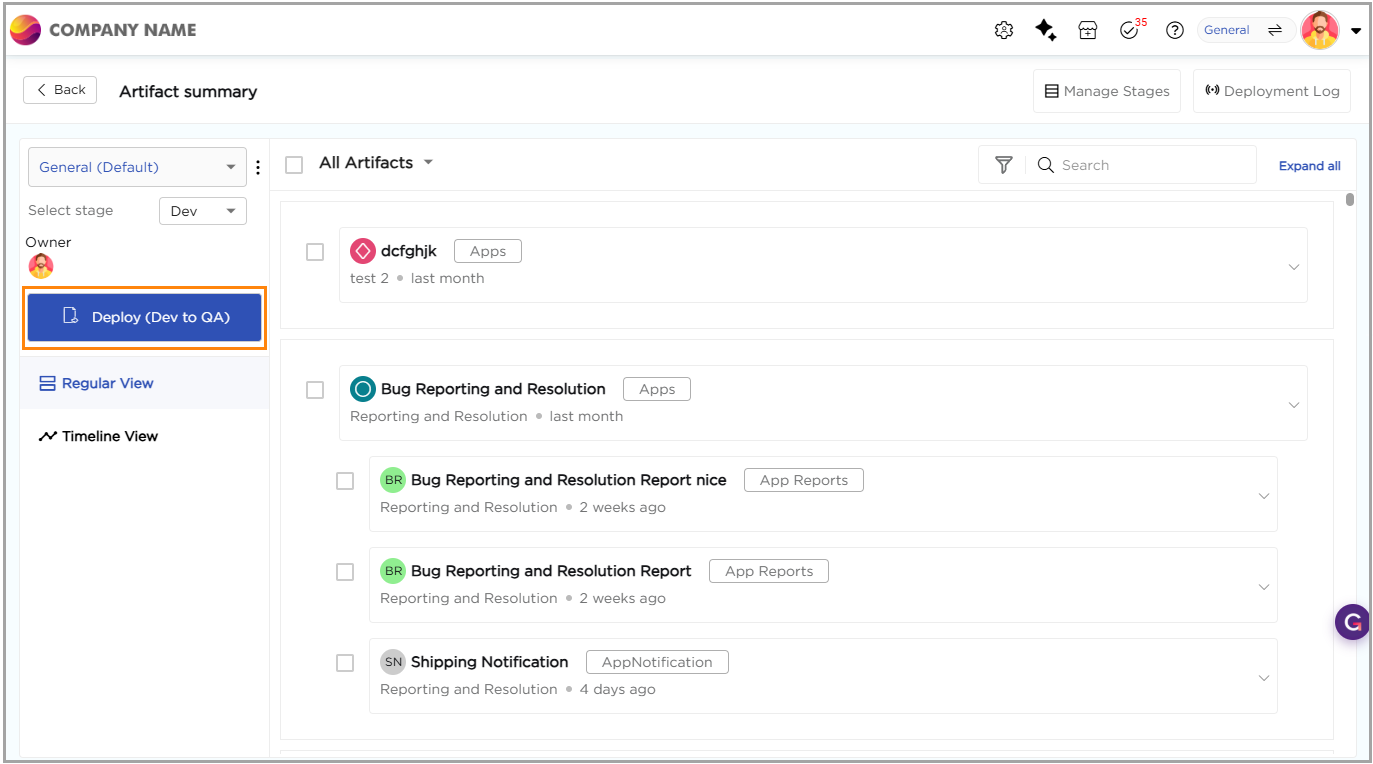
7. Branches hold all newly created artifacts and modifications made to existing artifacts until they are published to the next stage. In other words, branches act as an artifact holding area and can be viewed through the Artifact Summary page.
8. Advanced Sandbox includes a default General branch where all newly created or modified artifacts are parked.
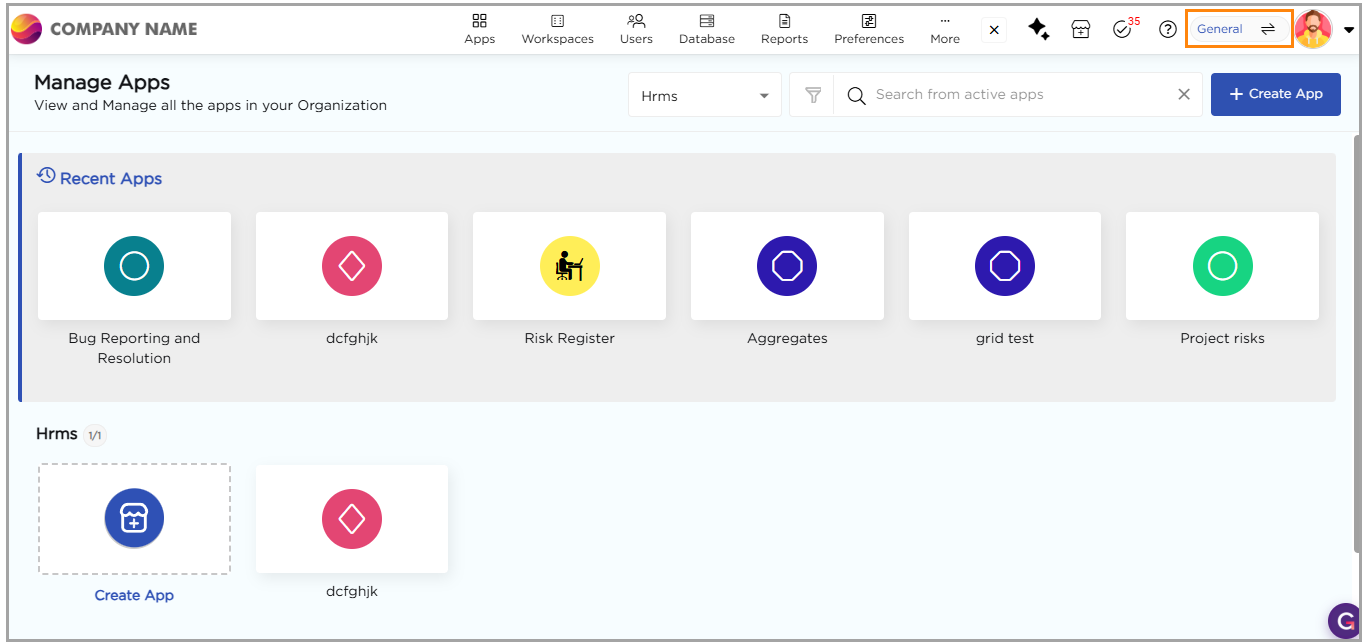
9. You can navigate to the General branch from the respective artifact list pages such as Apps, Data Tables, Data Sources, DS-Reports, DS-References, DS-Views, App Events, Lookups, Dashboards, Custom Menu, Preferences, Workspaces, and Users to deploy the created or modified artifacts.
- For example, from the Manage Apps page or Data Table list page, you can access the General branch using the option available in the top-right corner, next to the Profile icon.
10. In Advanced Sandbox, citizen developers such as Organization Admins and Workspace Admins can create their own branches in addition to the General branch to park artifact creations or modifications.
Note
Only Organization Admins manage artifacts such as Custom Menu, Public Dashboards, Organization Themes, Roles, and Workspaces. When these artifacts are created or modified, they are stored in a special Admin branch instead of a general branch. This ensures restricted access and keeps these artifacts exclusive to Organization Admins. The Admin branch is automatically created whenever such management activities occur.
11. Once artifacts are moved to the QA stage, the citizen developer who created them can test the solution or invite peer developers to test functionality before deploying to the UAT stage.
Note
Testing in the QA stage is not limited to citizen developers. Any user with the required QA access can participate in testing.
12. In the UAT stage, either a citizen developer or an end user with UAT access can test the artifacts or solutions.
Note
Since the UAT stage closely mirrors the Live stage, it is recommended that end users perform testing in UAT and share feedback before deployment to Live.
13. After testing and refinement in QA and UAT, the artifacts or solution can be deployed to the Live stage for real-time usage.
14. In the Live stage, end users use the deployed artifacts or solutions to perform real-time transactions and interactions.