Digital Signature (DS) is a cryptographic technique used to securely sign electronic documents. Unlike basic eSignatures, Digital Signatures offer advanced security and legal compliance through encryption and authentication techniques.
Note
A valid digital signature is indicated by a checkmark.
¶ 1. Types of Digital Signatures in Quixy
Quixy offers three main types of digital signatures: remote signing, signer gateway, and cosigning. Each type serves specific purposes and has its unique applications.
Important
Users can select the specific document they need to sign from a collection of documents received in a workflow for a digital signature.
¶ 2. Remote Signing
In Quixy, Remote signing refers to the process of electronically signing documents from a location different from where the document is generated. This is often done over the internet, allowing individuals or organizations to sign documents without physical presence. Remote signing is primarily used for organizational digital signatures.
Let's take an example, where a sales team needs to quickly finalize a contract with a client who is located in a different city. Using Quixy's remote signing feature, the sales team can send the contract electronically to the client. The client can then review the contract, electronically sign it using their digital signature, and send it back to the sales team, all without the need for physical meetings or paper documents. This streamlined process saves time and resources for both the sales team and the client, enabling faster and more efficient contract finalization.
¶ 3. What is an Organizational-Level Digital Signatures?
Organizational-level digital signatures refer to the use of digital signature solutions within an organization to facilitate the signing of electronic documents and forms at an organizational level. These signatures represent the organization as a whole rather than any specific individual within the organization. Learn more about Organizational-based Digital Signature.
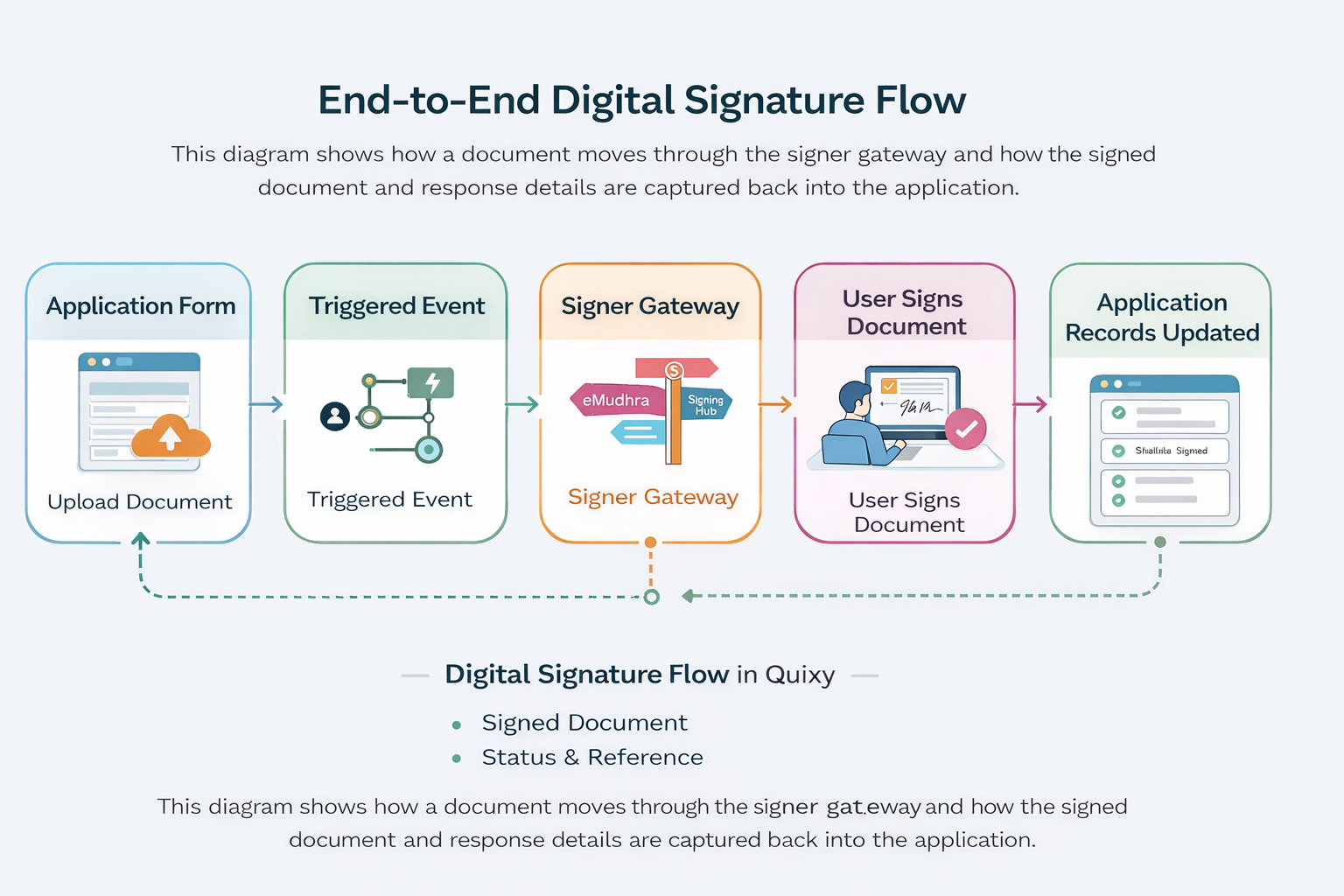
¶ 4. Signer Gateway
The signer gateway, also known as individual-based digital signatures, is another type of digital signature offered by Quixy. It provides a secure and legally recognized method for individuals to sign electronic documents.
¶ 4.1. Modes in Signer Gateway
The signer gateway offers four modes of digital signatures:
- Aadhaar Authentication: Leveraging the Aadhaar card's authentication infrastructure, this mode provides a secure and legally recognized method of signing electronic documents. Learn more about Aadhaar-based Digital Signature.
- e-KYC: This mode uses electronic identity verification methods, often linked to government-issued identification documents or databases, to authenticate the identity of individuals for digital signing. Learn more about e-KYC based Digital Signatures.
- Dongle: A dongle-based digital signature uses a hardware dongle for storing cryptographic keys and performing the digital signing process, providing an additional layer of security. Learn more about Dongle based Digital Signature.
- eSignature: This digital signature mode is the digital equivalent of a handwritten signature or a stamped seal, used to sign electronic documents or forms. Learn more about eSignature.
¶ 5. Cosigning
Cosigning refers to a scenario where multiple parties are required to sign a document electronically, indicating their agreement or approval. Quixy supports cosigning in various scenarios. Learn more about Cosigning.
¶ 5.1. Cosigning by Two Individuals
In this scenario, two individuals are required to cosign a document using the signer gateway. Both individuals apply their digital signatures to the document, indicating their joint agreement or approval.
¶ 5.2. Organizational Cosigning
In this instance, an organization cosigns a document using remote signing capabilities. The organization, as a corporate entity, applies its digital signature to the document to indicate its approval or endorsement.
¶ 5.3. Organizational and Individual Cosigning
This scenario involves both an organization and an individual cosigning a document using remote signing capabilities. It occurs when a document requires both organizational approval and the approval of a specific individual within the organization. Remote signing allows for the secure application of both organizational and individual digital signatures to the document.
Note
When co-signing a document, both signatories' signatures must be approved for the document to be considered co-signed. This requires the first person to enable co-signing for the second person's signature during the process. If only one signature is approved, the document will not be considered co-signed, and in such cases, the first person's signature will not be considered valid.
Note
When receiving multiple documents for digital signing as part of a workflow, you can select the specific document you need to sign from the collection, ensuring accuracy and precision in the signing process.
¶ 6. Benefits of Digital Signatures in Quixy
- Legal and Regulatory Compliance: By offering advanced security and legal compliance, digital signatures in Quixy help organizations meet legal and regulatory requirements for electronic document management. They ensure that signed documents are legally binding and comply with industry standards.
- Secure Document Exchange: Digital signatures facilitate secure document exchange within and outside the organization. They provide a tamper-evident seal that ensures the integrity of the document during transit and storage.
- Enhanced Data Security: Quixy's digital signatures enhance data security by protecting the authenticity and integrity of electronic documents. They use encryption and authentication techniques to safeguard sensitive information from unauthorized access or modification.